How to Transition Your Cat to a Raw Meat Diet

How to Transition Your Cat to a Raw Meat Diet

Transitioning a cat to a raw diet is something that the majority of us will have to do until the time comes when people grab a kitten from its mother's teat and start raw feeding from the beginning! But in the meantime, it's a major issue in the raw feeding movement. This step-by-step approach, and patience, will work for nearly every cat.
 
Kittens need no transition; they take to raw food like ducks to water. Special kitten food is not necessary. They eat the same food as adult cats, just more of it and more often. Kittens need about twice as much food per ounce of body weight as an adult. All that growing to do! Their stomachs are small, so they need to eat more often than adults, about every 4 to 6 hours. If you're getting a kitten(s), start them off right with a raw diet, and you won't have to worry about transitioning them.
 
Kittens should also be introduced to raw meaty bones, so they learn to eat them when they are young. Most kittens will readily tackle a chicken wing if offered. If you already have an older cat that will eat raw meaty bones, be sure to let the kittens learn from their older housemate. The kittens will copy the behaviors of the adults around them.
 
Adolescent and Adult Cats
 
We'll look at this in three stages:
 
  • From dry food to canned
  • From canned to raw
  • Adding raw meaty bones
 
The key to any transition is patience. The transition can be fast or very slow. In my household, transitioning to raw took about 5 seconds for some of them to three whole months for another. I have read about cats that took a year to transition. However long it takes yours, stick with it, it's worth it.
 
The transitioning tips below use the slow, gradual method. It usually works. Usually. For some cats, nothing seems to work. Give these methods a try and don't give up too soon. I thought Kai would never switch. Gearing myself up for feeding him separately forever, I turned around one day, after three months, and found him with his face buried in a plate of raw rabbit! I don't usually advocate using hunger to help transition your cat, other than the normal mealtime hunger of 12 hours or so, but you can try it if your cat is particularly stubborn. If your cat is adult, healthy and not obese, you can wait her out longer if she refuses to eat either canned or the raw. I wouldn't go longer than 36 hours though. This has worked for some people. Be aware that any cat, especially an overweight cat, is at risk for hepatic lipidosis if they don't eat every day.
 
Whatever your cat eats at present, it's always worth a try to just offer her some raw. She may surprise you. See if she will eat some cut up raw chicken or turkey, or some raw chicken liver. If she does…well, this may be easy.
 
From Dry Food to Grain-Free Canned
 
Cats get addicted to dry food, so this may be the hardest step, especially if your cat doesn't also eat canned food.
 
For cats that will only eat dry food:
 
First, stop free feeding dry food. Your cat does not need to have food available at all times. Eating two or three meals a day is fine, as is going 12 hours between meals. You want your cat to associate food with a person — you — not a place.
 
Start bringing out their food at regular mealtimes. Cats will learn the new routine very quickly. Leave it out for 30 minutes, and then put it away. At first, you may have to have more than two mealtimes a day. Cut back to two or three per day after a week, once your cat gets used to the whole idea of mealtimes. Put out one bowl for each cat, in separate rooms if necessary, so each cat feels relaxed about her meal.
 
Your cats will get hungry, but that's good. Nothing enhances a meal more than having an appetite. Just make sure each cat does eat, every day.
 
Once they seem used to mealtimes and are coming to you for their meals, start offering canned food. Choose a quality, grain-free canned food. Avoid foods with fish, as these are overly strong flavors which cats can get addicted to — to the point of refusing other flavors. Fish is not an ideal food for cats and should be fed sparingly as an occasional treat only. Try putting their dry food on a flat plate with a little of the canned food on the side. If they won't eat the quality canned brand you chose, try a different brand of canned. Even a lesser quality type if needed, as the goal at this point is to get them eating canned at all. They may ignore it completely, but it will get them to start associating the smell with dinner. Give this a week or so.
 
If they still aren't interested, next try putting out a plate of canned food with some of their dry food on top, whole or crushed a little. Being a little hungry makes them more likely to try something new. They may just pick the dry food off — that's okay. They will be getting just a taste of the canned food with it. Keep at this, even if you end up throwing away the canned food. Try different canned foods; your cat may like one more than another. If it looks like your cat is nibbling at the canned a bit, try putting out just the canned next time and see what happens. Some cats can be tempted by the gravy in some canned foods, and lick all that off. That's a step forward for a confirmed dry food addict.
 
Try some meat baby food. Some cats will eat this even if they refuse canned food. Try letting them lick it off your finger. If they will eat it, put a little on top of their canned food.
 
You can try putting a little canned food on your finger, and putting a little in your cat's mouth. Only do this if it won't stress out or frighten your cat, as you definitely don't want them to have bad associations with the new food or be afraid of you.
 
You can also try topping canned food with a dehydrated meat treat. Cats love Halo LivaLittles® freeze dried chicken and Wildside Salmon® treats. Both of these are 100% meat, dehydrated into cubes. These products appeal to dry food eaters as they are similar in texture, and the taste and odor are irresistible to most cats. Keep in mind that it's a treat, not a meal. Another good "bribe" topping is shaved bonito flakes. Mine love Kitty Kaviar®, which I used on raw food when transitioning them. Again, use fish products sparingly and not routinely.
 
You may ask "Why can't I just soak the dry food in water?" From Dr. Lisa Pierson, DVM, at CatInfo.org: "Dry food has a high bacterial content. Mold is also often found in dry food. There have been many deaths of dogs and cats secondary to eating moldmycotoxins, vomitoxins and aflatoxins which often contaminate the grains found in dry food. If you want to try the trick of wetting down the dry food to alter the texture, please leave it out for only 20-30 minutes then discard it. Bacteria and mold thrive in moisture."
 
Keep offering canned food. Plain or with a bribe topping. Don't give up, no matter how long it takes. Even if it takes months and months. Really, it's that important for your cat. Eventually, they will figure out that this really is food.
 
Keep any dry food you have closed up as much as possible. Put it in an over-sized Ziploc®, or a large Tupperware® type container and then in a room the cats can't get into. When they get hungry, they will try to get to it. Once your cats are eating canned food, get rid of the dry food completely. Out of the house. Cats have an excellent sense of smell; if it's in the house, they'll know.
 
Don't get discouraged if your cat turns her nose up at something she liked just the day before. This isn't unusual. That's how cats got that reputation for being finicky. Just try it again next time. Also, it isn't unusual for a cat to act ravenous one day and not be overly interested in eating the next. Don't worry about it if it happens occasionally.
 
Here's a tip: Take notes. Especially if you have more than one or two cats. Note which cats like which foods, and which flavors. You may have to try a lot of different kinds, and it helps to have a record. It's okay at this point if your cat only likes one kind; getting her off dry food is what's paramount. Always try to get your cats eating a quality grain-free canned food, but it's acceptable if at first they will only eat a lesser quality food. Just be sure to transition to a quality grain-free canned or raw for the long run.
 
Once your cat is off dry food, and is used to mealtimes, give her at least a couple weeks on this new diet, and then start on the transition to raw.
 
For cats that eat dry and canned:
 
This one is easy. Get rid of all the dry food.
 
Give them a couple weeks to get used to an all grain-free canned diet, with regular mealtimes, and then start the switch to raw.
 
From Grain-Free Canned to Raw
 
First try out some cut-up raw chicken or turkey, or chicken liver on your cat. Some cats go for it immediately. Most of my cats took to raw right away, but it helped that they were young. Kittens take to raw with no problems. The younger the cat, the easier the transition will probably be.
 
For your first try, either buy some commercially prepared raw food, or make some homemade.  My cats liked most of the different types of meat I tried: chicken, turkey, pheasant, quail and duck. Their hands — sorry — paws-down favorite is rabbit. This makes sense, as this is probably the closest to what they would be eating naturally. Or they know it's more expensive than chicken. Vary what they get so that they don't get fixated on just one food.
 
If they don't go for raw right away, there are a number of things to try. Don't give up!
 
Make sure the raw food is warm. Think mouse body temperature. Don't microwave it. Microwaving cooks the food and will reduce the nutrients you've been so careful to obtain. Put the food in a Ziploc® type baggie and place it in a bowl of warm water for 5-15 minutes, depending on how thawed it is. It is sometimes easier to then cut the bottom corner off the baggie and squeeze the food out.
 
Put their canned food on a plate rather than in a bowl, and put a little raw next to it. They probably won't eat it, but that's okay. The idea is to get them used to the smell of it, and to start associating that smell with their meal. As you may have noticed, fresh raw meat has a very slight, subtle odor and cats that are used to smelly canned food may not recognize it as edible at first.
 
 
Mix a little of the raw with their canned food. With my reluctant Kai, I started with ¼ teaspoon mixed into his meal. This is a tinyamount, and he would still sometimes eat around it. I kept it at this amount for a few weeks, and then upped it to ½ teaspoon for another few weeks. I kept offering it to him plain also, on the side, but he never touched it. I increased it to about 1 teaspoon and kept it there. Hey cat, I can keep this up forever! He surprised me after three months by suddenly changing his mind and eating a plateful of rabbit. Unless this happens with you, just keep increasing the percentage of raw, slowly, until it's all raw. Keep giving your cat the opportunity to eat a plain raw meal. Be patient. This is a big adjustment for your cat; let her guide you as to how fast you should go.
 
Try "bribe" foods sprinkled on top. Only use these if you need to, you don't want them to get hooked on these foods. Here are some toppings that worked for me:
 
  • Shaved bonito flakes. Use scissors in the can to cut it up into smaller flakes, something like oregano sized. It doesn't need to be refrigerated, but I keep it in there anyway so the cats can't get at it. They can smell it through the can.
  • Grated Parmesan cheese. Hey, it's Italian night!
  • Brewer's yeast. A good source of B vitamins. Don't use baking yeast. Don't use brewer's yeast on cats with digestive issues as it can cause bloating. Also, it can be allergenic in some cats.
  • Organic catnip. Just a little.
  • Crushed dehydrated treats. Cats love Halo LivaLittles® freeze dried chicken and Wildside Salmon® treats. Use fish products in moderation.
  • Juice from water-packed tuna or salmon.
 
Once your cats are eating raw, be sure to introduce chunked meat into their meals, if you haven't already. For their dental health and for their jaw muscles, cats need to chew, using the sides of their jaws. Cats who have only ever eaten canned haven't had to do much chewing, so you may have to start them gradually.
 
I add chunks, usually chicken, to all my homemade food and most of the commercial raw food I buy. It's more time consuming, but my cats are worth it. I hope to forestall expensive dental problems down the road. I add small pieces, about ½ inch square on average, but some twice that size. At first some of the cats ate around them, but shortly they were all chewing away, and none of the chunks was ever left over. Start small, and gradually increase the size up to the biggest your cat will eat. The lack of chunks is probably my only complaint with commercial raw foods, but you can always, and should, add your own to any thawed food.
 
Raw Meaty Bones
 
This is the term for meat with bones, fed whole or in parts. Cats can eat small whole raw chicken parts or other small birds. Getting them to do it is sometimes the problem. I have one cat, Thodin, who is crazy for chicken wings. She will go nuts when I take any baggie out of the fridge, thinking she's going to get a wing. She picks it up in her mouth, and runs off to a favorite spot in the kitchen and chomps away. She eats almost all of it, usually leaving only a small bone piece. She'll pretty much eat as many as I'll give her. I'm getting so I love to hear the sound of bones crunching from the next room!
 
If your cat has been eating dry or canned food for a long time, it may take a little time for their jaws to work up good chewing muscles to be able to tackle raw meaty bones. Start with boneless chunks in her ground food. Once she's had some practice chewing on hunks of meat, try her out on a small chicken wing.
 
I didn't have to teach Thodin to eat meaty bones, but the others had to be enticed, encouraged and taught. Here are some ideas to try:
 
  • Try introducing raw meaty bones when your cats are hungry. They are more likely to give it a try.
  • Roll a chicken wing in a "bribe" food you know they like, to encourage them to try it. I had some success with finely cut bonito flakes. Put the flakes in a baggie, add a chicken wing. Sort of like Shake 'n Bake® without the bake! A few of the cats would just lick off the flakes, but I got one to start chewing away on it on the very first try.
  • Add smaller meaty bones to their regular meals if they are already used to eating chunks.
  • Try other small game birds or rabbit. They might hate chicken but love Cornish game hens or quail.
  • Use your cat's natural instinct to copy. If you have one cat that will eat raw meaty bones, give it one when all your cats are hungry and let the others watch. They know that cat has something good. After they show some interest get out another and see if they'll go for it. I know this sounds a bit unusual, but I've seen it work.
 
Margaret Gates is the founder the Feline Nutrition Foundation.
Read more at http://feline-nutrition.org/nutrition/how-to-transition-your-cat-to-a-raw-diet 
Follow us on Twitter: @FelineNutrition

Acid Reflux in Dogs and Cats


Acid Reflux

Acid Reflux, in dogs, cats, and other pets, is often referred to as GERD, which is the abbreviation of its more technical name – gastroesophageal reflux disease. Veterinarians often refer to this condition in animals as esophagitis. Although sometimes confused with gastritis, or esophagitis, and can be related, there is an important difference.  This article will help to clarify this, as well as explain Acid Reflux in pets, the symptoms, and treatment options.
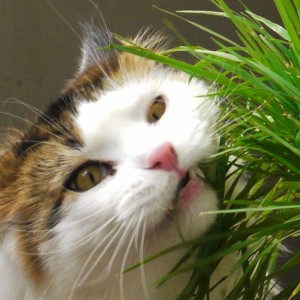
cat eating grassPeople tend to believe that it is not critical what animals eat. It may be surprising to learn that some of the things we suffer from as humans are identical to what our pets are experiencing, and may require similar remedies as well.
Technical Description:
GER, or gastroesophageal reflux, occurs when the contents of liquid and/or food flow backwards from the stomach, and into the esophagus, the muscular tube connecting the mouth to the stomach. Gastric acids, which contain hydrochloric acid, are formed in the stomach, and when Acid Reflux occurs, the gastric acid mixed with food and/or liquid is what can cause irritation to the esophagus.
This involuntary and uncontrollable reversal of stomach content can be a result of many things. When the sphincter muscle in the lower esophagus close to the stomach is weakened or damaged, this leaking of stomach contents can be more predominant. Along with hydrochloric acid, the flow of content may also contain bile salts, and other GI juices that add to irritation.
GERD is the disease attributed to regular irritation due to Acid Reflux. As a periodic, or possibly chronic condition, various degrees of esophageal inflammation may result, from mild inflammation, to severe damage to deeper layers of the esophagus. The inflammation, identified by the “-itis,” in gastritis and esophagitis, is specifically the condition of damaged tissue, swelling and inflammation caused by the Acid Reflux.

What causes Acid Reflux?:

The list of potential causes for Acid Reflux is extensive. The more common ones range from professionally administered treatments, to daily diets.
Any procedure requiring anesthetic application that allows the sphincter muscle of an animal to relax should be monitored carefully by a professional. Proper positioning of the animal during the procedure is also critical. Also, proper fasting prior to anesthetic procedures is very important.
Certain breeds of dogs and cats can have a genetic predisposition to Acid Reflux. For instance, Brachycephalic breeds, which have short noses and flat faces (dogs – Bulldogs, Terriers, Boxers; cats – Himalayan, Persian. Etc.), are more susceptible to GERD.
Actual physical conditions, such as a hiatal hernia in the upper portion of the stomach, or megaesophagus (See Megaesophagus for more information), which alludes to an enlarged esophagus and improper functioning of the esophagus muscles, can result in Acid Reflux.
Diet is always a concern. A meal that has very high fat content, or a similar regular diet can trigger the reflux process. As well, the problem can be the result of simple overeating.
One must keep in mind that persistent vomiting is also associated with life-threatening diseases such as intestinal obstruction and peritonitis. Seek professional consultation in all cases where the cause of persistent vomiting is not known.

Symptoms and Signs:

The easiest signs to recognize do not necessarily mean that your pet has GERDS or Acid Reflux. The following are things that may pertain to your animal’s condition that may be attributed to Acid Reflux, and can be readily observed.
  • Loss of appetite
  • Weight loss
  • Regurgitation of food or chronic vomiting
  • Gagging after eating
  • Burping
  • Lethargy and inactivity after eating
  • Excessive Salivating or drooling
  • Eating grass, plastics, and other unusual substances
Your dog, cat, or other pet may not be able to convey their problems to you the way people would. However, with diligent observation a lot can be determined. For instance, your animal may be having pain when swallowing, or it could be ongoing, resulting in crying, whining, or howling. They may be lethargic, and noticeably inactive after eating. You may find them with their heads hanging over the food or water bowl, but not partaking. They may be wandering nervously for no apparent reason, or pacing back and forth. Hence, any behavior that is abnormal may be held in suspicion, and could be an indication of an Acid Reflux issue.
Hopefully, you will know your pet better than anyone, and will spot any “red flags,” or obvious signs of distress. But, it is best not to jump to conclusions, or rely on non-professional diagnosis. Any symptoms should be considered as alerts for seeking professional help.

Diagnosis:

Taking the next step to determine if your pet has Acid Reflux will be to arrange an appointment with your veterinarian. Your vet will start with a simple examination. However, if there is suspicion of an Acid Reflux problem, your vet may suggest a range of tests, including blood and urine analysis, or a chest x-ray. If these tests are still inconclusive, and advanced testing is required, a vet may perform a fluoroscopy (x-ray), or esophagoscopy (viewing scope), to get a better look at the conditions of the esophagus for determining the cause of symptoms.

Treatment:

Irvine Compounding Pharmacy recommends a treatment called Cisapride, which is a medication for dogs and cats. For Acid Reflux, Cisapride can help with the regulation of motility, or regular pace of muscular contractions that control the passing of food in the stomach, allowing for better digestion, and a decrease in excess acid generation. Barring anything unusual, such as a hernia, or a foreign body lodged in the stomach, intestines, or elsewhere, the Cisapride treatment can be very effective, and is often complimented with an adjusted diet. Invariably, a low fat, low protein diet is recommended. Reducing the fat consumption encourages the strengthening of the sphincter, while reducing the protein limits the generation of excess stomach acid. It also may require a change in feeding schedule, frequency and quantity. Smaller portions given more often will help the healing process. Also, specific attention to food composition will be essential. Some vets prescribe antacids in the diet. However, some animals are allergic or sensitive to these.
The presence of Acid Reflux in our pets can very elusive to recognize. Imagining a cat encountering a hairball, or a dog having issues with digesting a bone are much easier than conceiving of more complicated problems. Let’s remember to let the qualified professionals do the official diagnosing, while we stick to adding the love and devotion in exchange for the purring and wagging tails.

All Hail Our Feline Overlords: Cat-centric Fiction

All Hail Our Feline Overlords: Cat-centric Fiction

cats lovin
What’s better than cats or fiction? Cat fiction.
It’s paws-itively purr-fect. (DON’T YOU GROAN — that pun is the cat’s meow).

petting cat

Ahem, anyway.
While there are plenty of well-known dog stories, perhaps (heh purr-haps?) it’s time to talk about how it’s cats who really rule fiction. Our fine feline companions take center stage not only as major players in these books, but in many of them, they’re the narrators, telling stories about their lives as cats or the lives of humans through their points of view.

kittens
In honor of our feline overloads, here’s a round-up of cat-centric fiction not aimed at young readers (not that those are bad or not worth checking out, but it’s a whole different….animal). Interesting to note how many of these books are also titles in translation.
seven lives and i am a cat
If you have ever lived with cats you know how cunning, tender, ferocious, underhanded, ingenious, foolish, and completely adorable they can be. The same words can be used to describe the hero of this novel, Sugar. This is the story—a love story of epic dimensions—of Sugar, a cat with a keen wit and a reflective nature, and his human, Madamigella, a writer with a frenetic and impossibly dispersive life.
In this his seventh life, Sugar has countless stories to tell and a remarkable talent for telling them. But his real area of expertise lies in his preternatural ability to domesticate his humans—whatever you do, don’t even suggest that we are the ones who domesticate him and his feline relatives!
I Am A Cat by Natsumi Soseki
So begins one of the most original and unforgettable works in Japanese literature.
Richly allegorical and delightfully readable, I Am a Cat is the chronicle of an unloved, unwanted, wandering kitten who spends all his time observing human nature – from the dramas of businessmen and schoolteachers to the foibles of priests and potentates. From this unique perfective, author Sōseki Natsume offers a biting commentary – shaped by his training in Chinese philosophy – on the social upheaval of the Meiji era.

waiting for gertrude old possums
Waiting for Gertrude by Bill Richardson
In Paris’s Pere-Lachaise cemetery lie the bones of many renowned departed. It is also home to a large number of stray cats. Now, what if by some strange twist of fate, the souls of the famous were reborn in the cats with their personalities intact? There’s Maria Callas, a wilful and imperious diva, wailing late into the night. Earthy, bawdy chanteuse Edith Piaf is a foul-mouthed washerwoman. Oscar Wilde is hopelessly in love with Jim Morrison who sadly does not return his affections. Frederic Chopin is as melancholic and deeply contemplative as ever, and in honor of the tradition of leaving love letters at his tomb, he is now the cemetery’s postmaster general. Last but not least, Marcel Proust is trying to solve the mystery behind some unusual thefts – someone has stolen Rossini’s glass eye and Sarah Bernhardt’s leg. Told in a series of amusing set pieces and intercepted letters, this is a delicious tale of intrigue, unrequited love, longstanding quarrels, character assassinations, petty spats, and sorcery that builds to a steady climax at the cats’ annual Christmas pageant.
These lovable cat poems were written by T. S. Eliot for his godchildren and friends in the 1930s. They have delighted generations of children since, and inspired Andrew Lloyd Webber’s brilliant musical Cats .

tailchaser's song morte
Tailchaser’s Song by Tad Williams
The story of Fritti Tailchaser, a courageous tom cat in a world of whiskery heroes and villains, of feline gods and strange, furless creatures called M’an.
Mort(e) by Robert Repino
The “war with no name” has begun, with human extinction as its goal. The instigator of this war is the Colony, a race of intelligent ants who, for thousands of years, have been silently building an army that would forever eradicate the destructive, oppressive humans. Under the Colony’s watchful eye, this utopia will be free of the humans’ penchant for violence, exploitation, and religious superstition. The final step in the Colony’s war effort is transforming the surface animals into high-functioning two-legged beings who rise up to kill their masters.
Former housecat turned war hero, Mort(e) is famous for taking on the most dangerous missions and fighting the dreaded human bio-weapon EMSAH. But the true motivation behind his recklessness is his ongoing search for a pre-transformation friend—a dog named Sheba. When he receives a mysterious message from the dwindling human resistance claiming Sheba is alive, he begins a journey that will take him from the remaining human strongholds to the heart of the Colony, where he will discover the source of EMSAH and the ultimate fate of all of earth’s creatures.

the master and margarita kafka on the shore
The Master and Margarita by Mikhail Bulgakov
Combining two distinct yet interwoven parts—one set in ancient Jerusalem, one in contemporary Moscow—the novel veers from moods of wild theatricality with violent storms, vampire attacks, and a Satanic ball; to such somber scenes as the meeting of Pilate and Yeshua, and the murder of Judas in the moonlit garden of Gethsemane; to the substanceless, circus-like reality of Moscow. Its central characters, Woland (Satan) and his retinue—including the vodka-drinking black cat, Behemoth; the poet, Ivan Homeless; Pontius Pilate; and a writer known only as The Master, and his passionate companion, Margarita—exist in a world that blends fantasy and chilling realism, an artful collage of grotesqueries, dark comedy, and timeless ethical questions.
Kafka on the Shore by Haruki Murakami
Kafka on the Shore, a tour de force of metaphysical reality, is powered by two remarkable characters: a teenage boy, Kafka Tamura, who runs away from home either to escape a gruesome oedipal prophecy or to search for his long-missing mother and sister; and an aging simpleton called Nakata, who never recovered from a wartime affliction and now is drawn toward Kafka for reasons that, like the most basic activities of daily life, he cannot fathom. Their odyssey, as mysterious to them as it is to us, is enriched throughout by vivid accomplices and mesmerizing events. Cats and people carry on conversations, a ghostlike pimp employs a Hegel-quoting prostitute, a forest harbors soldiers apparently unaged since World War II, and rainstorms of fish (and worse) fall from the sky. There is a brutal murder, with the identity of both victim and perpetrator a riddle – yet this, along with everything else, is eventually answered, just as the entwined destinies of Kafka and Nakata are gradually revealed, with one escaping his fate entirely and the other given a fresh start on his own.

the cat inside fur person
The Cat Inside by William S. Burroughs
Originally published as a limited-edition volume, this moving and witty discourse on cats combines deadpan routines and dream passages with a heartwarming account of Burroughs’s unexpected friendships with the many cats he has known. It is also a meditation on the long, mysterious relationship between cats and their human hosts, which Burroughs traces back to the Egyptian cult of the “animal other.”
The Fur Person by May Sarton
This enchanting story and classic of cat literature is drawn from the true adventures of Tom Jones, May Sarton’s own cat. Prior to making the author’s acquaintance, he is a fiercely independent, nameless Cat About Town. Growing tired of his vagabond lifestyle, however, he concludes that there might be some appeal in giving up his freedom for a home. Finally, a house materializes that does seem acceptable and so do the voices that inhabit it. It is here that he begins his transformation into a genuine Fur Person. Sarton’s book is one of the most beloved stories ever written about the joys and tribulations inherent in sharing one’s life with a cat.

wild road cat fantastic
The Wild Road by Gabriel King
Secure in a world of privilege and comfort, the kitten Tag is happy as a pampered house pet–until the dreams come. Dreams that pour into his safe, snug world from the wise old cat Majicou: hazy images of travel along the magical highways of the animals, of a mission, and of a terrible responsibility that will fall on young Tag. Armed with the cryptic message that he must bring the King and Queen of cats to Tintagel before the spring equinox, Tag ventures outside.
But had ancient Majicou somehow misjudged? Tag barely knows his own backyard and is scarely equipped for a quest out into the wide world! But ready or not, Tag is catapulted into the unknown to face danger and win allies in the wily urban fox Loves a Dustbin, and the far-seeing magpie One for Sorrow. Along the way, others will join their quest: Cy, the strange little tabby; Sealink, the globe-trotting cat with an eye for a handsome tom; and Mousebreath, wise in the ways of the world. Together, this band of frightened yet courageous animals will brave the wild road to seek the King and Queen.
But finding the royal pair is only half the challenge, as an evil human known only as the Alchemist doggedly pursues the Queen for hisown ghastly ends. For the Queen, a descendant of the legendary line of Golden Cats, holds the key to an ancient prophecy that foretells enormous power for those who control this rare and extraordinary breed.
And if the Alchemist achieves his goal, the world can never be safe again.
Catfantastic edited by Andre Norton
Two of the biggest names in the fantasy field have put together a unique collection of fantastical cat tales for friends of furry felines. Cats work a special magic in these stories from the future, from the past, and from dimensions people never dream of.

meowmorphosis autobiography
The Meowmorphosis by Franz Kafka and Coleridge Cook
“One morning, as Gregor Samsa was waking up from anxious dreams, he discovered that he had been changed into an adorable kitten.”
Thus begins The Meowmorphosis—a bold, startling, and fuzzy-wuzzy new edition of Franz Kafka’s classic nightmare tale, from the publishers ofPride and Prejudice and Zombies! Meet Gregor Samsa, a humble young man who works as a fabric salesman to support his parents and sister. His life goes strangely awry when he wakes up late for work and finds that, inexplicably, he is now a man-sized baby kitten. His family freaks out: Yes, their son is OMG so cute, but what good is cute when there are bills piling up? And how can he expect them to serve him meals every day? If Gregor is to survive this bizarre, bewhiskered ordeal, he’ll have to achieve what he never could before—escape from his parents’ house. Complete with haunting illustrations and a provocative biographical exposé of Kafka’s own secret feline life, The Meowmorphosis will take you on a journey deep into the tortured soul of the domestic tabby.
The Autobiography of Foudini M. Cat by Susan Fromberg Schaeffer
Grace the Cat is not at all like me, as she is forever bent on mischief. But because I am an older and wiser cat, she looks to me for counsel, and so I have allowed Grace to prevail upon me to set down the story of my life as a housecat in the human world. . . .
As the irrepressible Foudini M. Cat regales us with his adventures, an exciting story unfolds. After his valiant but frail mother leaves him in search for food and never returns, the starving kitten is taken, hissing and spitting, to a frightening room with cages and men in white coats. Facing the specter of eternal sleep, the homeless cat is adopted by a woman he later calls “Warm.” (“All cats like to make up strange names for things.”)
From here Foudini enchants us with splendid tales of his unlikely but ultimately poignant friendship with Sam the Dog; their trips between Cold House in the city and Mouse House in the country; his mystical experiences with famous felines of the past; his near-death in a raging river that leads to a profound act of sacrifice; and his introduction to a silly young thing named Grace, which evolves into something completely unexpected.

the guest cat the cat who
The Guest Cat by Takashi Hiraide
A couple in their thirties live in a small rented cottage in a quiet part of Tokyo; they work at home, freelance copy-editing; they no longer have very much to say to one another. But one day a cat invites itself into their small kitchen. It leaves, but the next day comes again, and then again and again. Soon they are buying treats for the cat and enjoying talks about the animal and all its little ways. Life suddenly seems to have more promise for the husband and wife — the days have more light and color.
The Cat Who Could Read Backwards by Lilian Jackson Braun (and the entire “The Cat Who…” series!)
Jim Qwilleran is a prizewinning reporter who’s been on the skids but is now coming back with a job as feature writer (mostly on the art scene) for the Daily Fluxion. George Bonifield Mountclemens, the paper’s credentialed art critic, writes almost invariably scathing, hurtful reviews of local shows; delivers his pieces by messenger; lives with his all-knowing cat Koko in a lushly furnished house in a moldering neighborhood, and has a raft of enemies all over town.
He offers the newcomer a tiny apartment in his building at a nominal rent, and Qwilleran grabs it, surmising the deal will involve lots of cat-sitting. Meanwhile, a gallery whose artists get happier treatment from Mountclemens is owned by Earl Lambreth. The acerbic critic has praised paintings there by a reclusive Italian named Scrano; the junk assemblages of Nino, who calls himself a “Thingist,” as well as works by Lambreth’s attractive wife Zoe.
It’s Zoe who, one night past closing, finds her husband stabbed to death in the vandalized gallery. Days later, Qwilleran, guided by an insistent Koko, finds Mountclemens’s knifed corpse on the patio behind his house.

high 5 cat gif

And if reading about cats isn’t enough and you’re looking for the purr-fect (heh HEH) literary name for your furry companion, we have a guide to help you out with that.